
Bloomery: Village and Furnace, Part 2
by Robert B. Wolford
Slavery
Bloomery district inhabitants had constant reminders of their region's peculiar institution, slavery. Slaves in the district created an agrarian labor force,63 and ownership provided owners an economic advantage over those who abstained or did not buy slaves. In 1850, twenty-one of the district's wealthiest thirty-five land owners owned slaves evidencing the practice of slavery by promontories.Twenty-nine slave holders resided in the district in 1850;64 by 1860, their number had declined to twenty (Table 4).65 An even more revealing comparison of data are the number of slaves recorded for each of the census years. One hundred and two slaves inhabited the district in 1850; that figure declined to forty-eight by 1860.66
No attributable cause for the decline of slave and slave owner numbers is indicated by extant records. The immigration of northerners to the district67 and their negative sentiments toward slavery likely had a negative effect on slavery. Despite this, the largest district employer, Samuel Pancoast, a northerner, owned twenty-four slaves in 1855.68 Evidence has not surfaced to explain the decline of slavery in the district between 1850 and 1860, but it reflected contemporary national trends.69
Farmers formed the largest group of slave holders in the district in 1850 (Table 4).70 They owned seventy-five people or 74% of district slaves. These figures do not reflect a large agrarian slave economy.
Non-agrarian owners were tanners, merchants, laborers, saddlers, millers, manufacturers, and women for whom no occupation was recorded. These people held twenty-seven slaves or 26% of the slave population. The majority held two or less slaves, indicating that business people did not keep slaves in large numbers.
In 1860, the district slave-owners collectively owned forty-eight slaves, an average of two each (Table 4). Evidencing that agriculture was the largest "employer" of slaves is the fact that fourteen or 70% of twenty district slave-holders were farmers.71 They owned forty-one slaves, representing 85% of the slave population, an increase over 1850 percentages.
15| District | 1850 | 1860 | |
| Farmers | 20 | 14 | |
| Businessmen | 9 | 6 | |
| Totals | 29 | 20 |
| District | 1850 | 1860 | |
| Farmers | 75 | 41 | |
| Businessmen | 27 | 7 | |
| Totals | 102 | 48 |
Business people who owned slaves included one blacksmith, one physician, one minister, one mason, one factory hand, and one saddler; only the physician owned two slaves. In 1860, these people owned 15% of the slave population, a reduction in similar figures from 1850.
The use of slaves as farm laborers was a small and declining practice. Only twenty of 124 farmers in Bloomery District in 1850 owned slaves.72 In 1860, this figure was fourteen out of 126 farmers.73 Though the number of district farmers in 1860 grew slightly from 1850, the number of those engaged in slavery declined.
For business people, a different indicator of decline is demonstrated. In 1850, nine of 60 business people owned slaves.74 By 1860, the proportions showed little change, with six of 55 business people being slave owners.75 This implies that the decline of slavery among business people is partly attributable to the decline in businesses in the district.
The height of district slave use occurred in 1850, when 29 of 184 self-employed persons (farmers and business people) owned slaves.76 Clearly, the district lacked large plantations and staple crops. These slave data suggest that Bloomery District had small farms and cottage industries that used small numbers of slaves.
Slavery at Bloomery Furnace
Slave numbers that would rival plantation use occurred only once at a district business. Ironically, the furnace ironmaster, a northerner, possessed these slaves. In 1855, he was assessed for owning twenty-four slaves,77 making him the leading slave owner for the years 1850 to 1860. However, he only owned them for one year. Prior to78 and after79 1855, he was not assessed for slaves. The only major items for which he was assessed in the years other than 1855 were horses. Slave numbers for some of his neighbors dropped, while for one neighbor, the number of horses rose.80 This phenomenon suggests that a rental or barter arrangement existed between him and his neighbors for the labor of their slaves in exchange for the horses of the furnace since he owned neither horses nor slaves in 1856.81
17The furnace's use of slaves did not seem to influence the practice in the district during slavery's waning years. Pancoast held the slaves for too short a time to make an impact on the economy. The more minor industries did make an impact on the local economy by retaining and perpetuating slavery.
Furnace Affluence and Influence
The real estate value entries from the extant records for Bloomery are particularly interesting. The value of real estate owned is one of the only extant indicators of the affluence and economic influence a person may have wielded in Bloomery District. Unlike the federal records in Washington, District of Columbia, the ravages of the American Civil War in Hampshire County, West Virginia,82 left few records for the researcher for the period from 1860 until 1880. Only the 1875 records are available. For this reason, records showing district land value and land tax records are useful because they are the most intact. Personal or corporate influence in the district was studied solely on the basis of land value records.
To test the reliability of the land tax records as indicators of influence, the available personal property records for 1850, 1855, 1860, and 1875 were compared to the land tax records for the same years to see if a positive correlation existed between personal property and real estate holdings. This proved to be the case.
The data indicate that in 1850, 1855, 1860, and 1875 when land values of individuals rose so did their personal property value (Figures 5, 6, 7, 8). The correlation though was not uniform in each of the years studied. In some instances, the value of personal property owned exceeded the value of land owned. The data also demonstrate that some residents owned much land but small amounts of personal property. But such cases were few and did not negate the contention that personal and real property holdings validly indicate economic influence in the district.
The availability of the personal property tax records (1850, 1855, 1860, and 1875) at Richmond, Virginia made them ideal choices for examination. Data, though scattered, demonstrate the furnace's influence
18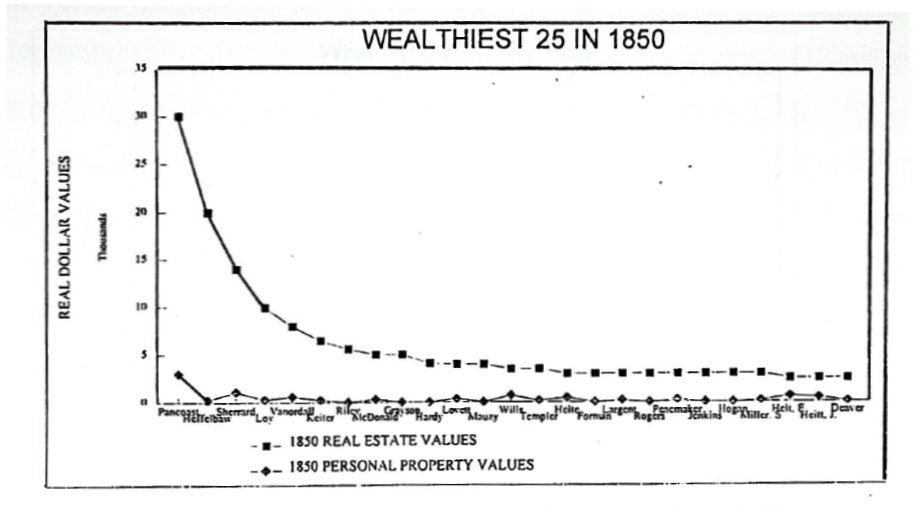 Figure 5. Twenty-Five Wealthiest Land Owners by Property Values, 1850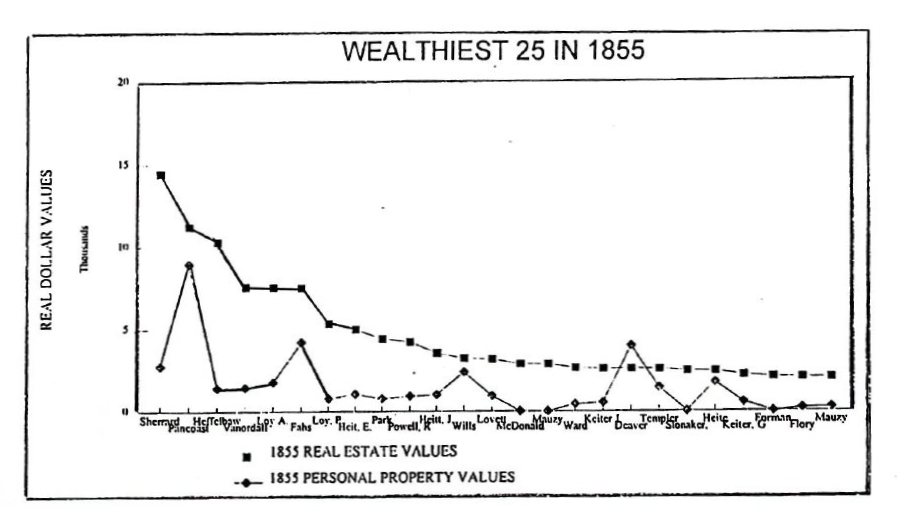
Figure 6. Twenty-Five Wealthiest Land Owners by Property Values, 1855
19
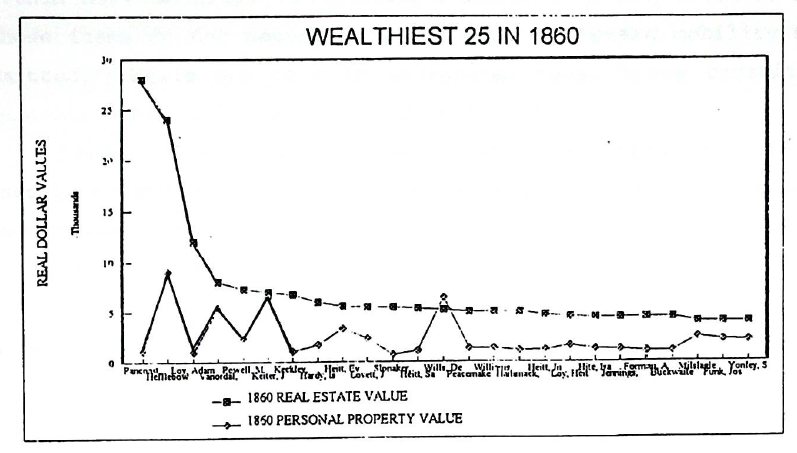 Figure 7. Twenty-Five Wealthiest Land Owners by Property Values, 1860
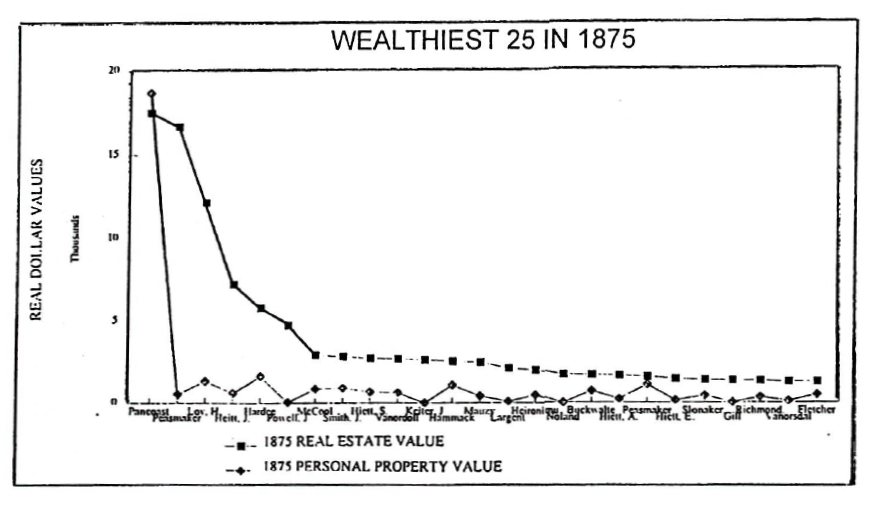 Figure 8. Twenty-Five Wealthiest Land Owners by Property Values, 1875
20
within the community. While records document clocks, watches, and furniture, these items do not necessarily correlate to upward mobility and were thus omitted. While numerous in categories, these items constituted a small percentage of an individual's aggregate values.
Horses, slaves, and aggregate values enumerations were selected for used in determining the socioeconomic status of Bloomery residents. These contemporary items make them valuable tools for comparing property residents possessed.
Use of the three categories identified what labor resources and amenities residents accumulated. Labor resources (i.e., horses and slaves) served their owner as a means for upward socioeconomic mobility. These "commodities" could signify higher degrees of socioeconomic status since they provided opportunities to play a more significant role in the economy of the area. Lack of such resources could have impeded upward socioeconomic movement and caused status regression.
Influential residents who did not own a horse or slave were detected by use of aggregate personal property data. This data identified people like gunsmiths and bankers who may not have owned any labor resources but could exercise influence that otherwise would be overlooked.
Since the real estate records demonstrate a positive correlation with contemporary personal property records they will be used from every fifth year to track the influential (wealthiest 25) in Bloomery District.
The real estate records for 1850 show that the Bloomery ironmaster was the wealthiest district resident.83 His land holdings, valued at $30,000, surpassed that of the least wealthy of the top twenty-five district land owners by $27,500.
In 1855, the ironmaster was ranked second with a value of $11,206 ($18,794 less than his 1850 holdings). This reduction in real estate value can be attributed to his 1855 slave purchase or rental. It is possible that he sold or traded some of his real estate holdings to get these slaves.
By 1860, the furnace owner was again the wealthiest district land owner, despite the furnace being out of blast (operation). This suggests that
21though his furnace was idle, he still had some influence. Apparently regaining most of his former holdings, he was assessed for $28,000 worth of land,84 $2,000 less than his 1850 holdings.85
In 1865, he ranked fifth on the list of twenty-five. His holdings had dropped from their 1860 value to $8,994, a decrease of $15,006.86 The American Civil War likely precipitated this depreciation in land values.
The data suggest that the furnace had suffered a decline during the war either by loss of holdings, by depressed land values, or both. The land tax records record that the tax commissioner deducted $4,000 for decayed furnace property.87 This reaffirms that the furnace was out of blast during the Civil War but that its property was not burned, as is denoted on the other residential land assessments. Even though Bloomery's ironmaster fell four places from his 1860 position, he still maintained an influential position in 1865.88
The furnace disappears from the real estate records in 1870 indicating that it was out of blast, its lands being distributed among several people. According to deed records, the tract containing the furnace was owned by Joseph Pancoast and James McGee, of Philadelphia.89 Another party likely paid the taxes for them since their residence was elsewhere.
In 1875, the furnace owners again topped the list of the twenty-five wealthiest persons in Bloomery.90 Apparently the owners re-purchased the former furnace property and put it back into blast (resumed operations). The value of the furnace lands was $17,503.
The furnace again occupied the number one position in 1880,91 although it was valued at $16,628, a decrease of $875 from its 1875 assessment.
The data on the wealthiest land owners for 1850, 1855, 1860, 1865, 1870, 1875, and 1880 indicate that Bloomery Furnace held a leading if not dominant economic position of affluence and influence for all but one of the years. As indicated by land values in an area where land holdings denoted influence the furnace exerted an influence.
The study indicates that although the furnace suffered declines during its operational life its economic presence continued for nearly the entire
22period. This assumes that a business owner who is featured among the top twenty-five wealthiest district residents would be likewise dominant in the village.
The Bloomery Industry, 1850 and 1880
In 1850, Bloomery village had six of ten district industries producing articles with a minimum annual value of $500.00.92 The industries included two tanneries and one each iron manufacturer, gunsmith, woolen manufacturer, shoemaker, and miller.
The tanners maintained similar operations that together employed five men at a cost of $20.00 a month.93 Neither owned slaves,94 and both businesses reflected losses.95

The sole miller in 1850 realized a profit of $30.00.96 He employed one man at $20.00 a month97 and owned nine slaves.98
The gunsmith employed four men paying each $6.00 each a month99 and owned no slaves.100 He realized a profit of $700.00.101
The village woolen mill employed two men who each received $18.00 a month. The concern had a profit margin of $263.00.102 The woolner owned no slaves.103
The other industry in Bloomery producing a minimum of $500.00 worth of goods was the Bloomery Iron Furnace. It employed seventy men who received an average wage of $23.14 a month. It had a profit of $4,412.40.104 The ironmaster owned no slaves in 1850.105
Three millers and one shoemaker were located in Bloomery district but outside the village. The shoemaker employed two men at $20.00 each per month. He realized a profit of $470 106 and owned no slaves.107
The millers collectively employed four men at an average wage of $19.33 per month. An average profit of $156.33 was realized by each.108 The most profitable miller owned four slaves.109
Collectively, Bloomery District (district and village) industries employed eighty-eight men or110 about 6.4% of the district's population of 1,364 people in 1850. Of those eighty-eight men, seventy or 79% worked at the furnace. These figures demonstrate the influence the furnace had on the
23economy of Bloomery in 1850. The furnace paid an average wage of $23.14 per month while the average district industrial wage was $21.80. A furnace job was desirable when compared to the $8.00 monthly wage of district agricultural workers.111 The furnace sat idle between 1857 and 1874, so no data were available for a comparison of the furnace for 1860 to 1870.

In 1880, the district economy little resembled its 1850 industrial self. The furnace was operating again in 1875 and 1880. The company employed five men at an average monthly wage of $33.00.112 However, during most of 1880, it was out-of-blast for maintenance,113 and no report chronicled production and value during this period.
Other industries in the district in 1880 included saw mills and a shoemaker. The tanneries were closed because larger operations at Paw Paw, West Virginia, snuffed them out. Small-scale operations faded away as the dawn of automation emerged.
Education and Women at Bloomery Furnace
Bloomery district offered education at taxpayer expense114 at two common schools.115 One was located near the Virginia line (Bloomery School), the other in the furnace area (Furnace School).116 Bloomery Furnace owned and operated the Furnace School for the benefit of the children of furnace workers, but it was also open to the public.117 It is likely that the children of non-furnace workers went to school under subscription to the teacher since the furnace paid for the school.
The 1850 census listed eighteen children from the furnace as having attended school.118 Ten of those attending school were children of the influential people at the furnace (e.g., ironmaster, clerk, molder). Another four of the students were the children of a local farmer. Daughters and a wife of a laborer comprised the remaining four students.119 This evidence suggests that those children of higher socioeconomic-status employees at the furnace were more likely to get an education at the school.
Twenty-four of forty-two school age children in the furnace area did not attend school, including sixteen females and eight males.120 Fourteen of these children came from households where both parents were illiterate and
24eight where only the father was literate.121 The occupation listed for fourteen of the fathers of these children was "laborer," but also noted was one of each of the following: carpenter, miller, mason, and molder.
The evidence suggests that children of the less influential and illiterate workers at the furnace did not take or did not have the same educational opportunities afforded to those of more influential status. Interestingly, in no instance did a family educate only one gender. The census only records those who attended school within the census year and makes no distinction about where or for how long they attended school.
The school likely closed after 1857, since there were several text books (14 Smith's Arithmetics, 1 Kirkland's Grammar, and "1 lot of books") in the auction records of the sale held at the furnace in March of that year.122
In 1880, the school re-opened with the teacher boarding with a family in the furnace area.123 According to the census of 1880, fifty-four 124 students attended the furnace school.125 Of the twenty-one households with students in school, only four had illiterate heads of house. Twenty-one school-age children (eight were male and thirteen female) did not attend school.126 Largely the children had literate heads of households (11 of 15).
In 1880, there were three children (all female) who did not attend school from households that had other children in school. All three were free of infirmities and came from farming families which had other daughters in school.127
Women at the Furnace
Records poorly illustrate the role of women at the furnace and in the district. The 1850 census recorded only "male person[s] over 15 years of age,"128 underscoring the status and perception of women in this period in American history. In 1860 and thereafter, the censuses recorded the occupation of all persons over fifteen years of age.129 This study focused on the women sixteen and older, since the likelihood is higher that they were married and active in an occupation.
Households in the furnace area consisted of a male head, a woman of nearly the same age (presumably a wife), and children, i.e., a nuclear
25family.130 In about 39% of the households identified as being in the furnace area, one or two other people with a different surname(s) (likely extended family or boarders) were present in the homes in the census year.
Women in furnace households would likely have been concerned with the home while the male was at work. This type of work included gardening, spinning, sewing, cooking, and other activities perceived as traditional female roles. In addition, the women likely worked the furnace farm. Jobs at harvest time would have required all available hands.
Women would have also taken advantage of other opportunities to contribute to the family economy; however, the census data fail to give explicit evidence. Joseph Walker, in his work on Hopewell Furnace at Elverson, Pennsylvania, noted several opportunities at that furnace for women to earn money to add to the family coffers. He identified providing meals for workers, mending clothing, and in some cases providing a place to sleep for single men as sources of income.131 In addition to the care of furnace workers, women could have sold to the store or workers home-products (e.g., eggs, butter, candles, soap, and pickles).132 The affluent in the area owned slaves; therefore, there was little opportunity for women to be hired as paid household help.133
No evidence concerning women working at the furnace exists, but since labor shortages occurred at the furnace, it's likely a wife or daughter filled in for a sick male or was employed as a hand at a time of need. Walker points out instances at Hopewell Furnace when women worked at the mines, cleaned castings, and "filled the stack."134 Since workers earned their pay from the hours worked, a family could not have afforded to have days of wages lost. In cases like that of Daniel Boley, a worker at Bloomery Furnace, who had four daughters under ten and a son one year old, his household probably relied exclusively on his wife Ellen in a time of need.135
The furnace households had changed little by 1880. The nuclear family and the household patterns looked the same. The only significant difference resulted from the abolition of slavery and a decrease in boarders and extended family.136 The more limited operation of the furnace, relative to
261850, no doubt caused the latter.
Like the women at other furnaces, the women that lived at Bloomery Furnace led lives that primarily focused on tasks around their homes. The data for Bloomery suggest that women used their homes as a means to generate income for their families. The life of furnace women was similarly regulated by the schedule of the furnace, except that the wives of furnace laborers probably kept longer hours since they would have prepared meals before their spouses or boarders went to work.
Women enjoyed no unique employment opportunities at the furnace. All women in the district appeared to have the same job opportunities. Though records of 1880 recount occupations for women, none required skills beyond the realm of housekeeping. The furnace expanded the employment opportunities for women only in the sphere of domestic life.
Conclusion
Bloomery Furnace provides a unique contrast to other regional iron furnaces in that the village of Bloomery did not become vacant when the furnace closed. The village of Bloomery remained independent of the furnace for the period of study. The events in the iron market did not severely affect the village, just the furnace area. Evidence suggests the diversification of Bloomery village kept the area viable during hard times for the furnace. The furnace was an industrial neighbor not master for the village. The financial involvement137 by some Bloomery residents and the fact that the furnace school was open to the public bears out this symbiotic relationship.
There is little doubt though that Bloomery Furnace was influential in the socioeconomic composition of Bloomery District. By virtue of its ability to affect the lives of a higher percentage of the district's population when compared to other businesses, the furnace reigned as a socioeconomic force. Despite mismanagement and competition from other furnaces the furnace survived a series of operational peaks and closings. Terms of rebuilding, refurbishing, and blasting followed periods of silence. Its owners endured
27litigations, booms, busts, auctions, and chancery suits. Abandoned with a stack half filled with the elements of production, the furnace stands as a testament of the convoluted business cycles of iron making.138
The economic histories of furnaces are fraught with hardships for their ironmasters. Other owners suffered like the Bloomery ironmaster from legal entanglements and bad management.139 Some suffered from ethnic rivalries within the labor force140 and strikes,141 but the Bloomery Furnace was spared these types of labor problems. The economic history of Bloomery Furnace lacks clear details due to an absence of business records; what has survived indicates that a furnace destroyed fortunes for ironmasters. In this respect Bloomery lacked uniqueness; it also experienced legal problems.
Socially, the ironmasters of other furnaces furnished the last word on all questions in their respective villages.142 Bloomery's ironmasters lacked this authority because the furnace was independent of the village. The Bloomery Furnace ironmasters even borrowed money from influential and affluent village residents.143 The furnace had little if any financial, legal, or de facto control over the village. The road passing through the village provided as much business for the other industries as could be expected with or without the existence of the furnace. Unlike other furnaces, neither the operation nor the operators of Bloomery Furnace dictated rules of conduct to the adjacent village.
The women at the furnace took advantage of the opportunity to board men in their homes and earn an income for themselves and their families. In this light, the influence of the furnace was economically advantageous for both. This aspect of furnace life reflects the feudal-like society of furnace life.
The school at the furnace accommodated the children of the furnace workers, displaying a concern for the welfare of the family of employees. Bloomery, though, holds a distinction among furnaces by also having its school
28doors open to the general public. The pupil population of the Bloomery school mostly came from higher income furnace families or from outside the furnace.144 On the whole, the trapping of a company-operated school fits the mold of a closed feudal society that was associated with furnace communities.
Slavery at the furnace was, with the exception of the twenty-four slaves used in 1855, absent. The data suggest that the furnace little influenced slavery in Bloomery.
The furnace influenced ethnicity only slightly, if at all. Ethnic groups were not attracted to the furnace with greater influence than that of the district.
Having all necessary elements for iron production recommended Enoch's Mill Run as an ideal location for a small colonial iron-producing facility. Because of the large quantities of superior grade ore, this commercial venture continued into the later part of the 19th Century. Even if the furnace had not been erected, development of water-powered industries were inevitable, due to the fall of Enoch's Mill Run.
With its stone stack, Bloomery Furnace participated in establishing the industrial foundation of this nation. Its wares likely crossed the continent in the wagons of westward pioneers. Like other furnaces of this region, its rural surroundings were far from centers of population, yet it affected the fabric of the society that became modern America. The uniqueness of Bloomery Furnace is that its economic influence was limited to its property holdings and did not engulf its adjacent village which prospers today along West Virginia route 127 in Hampshire County.
29End Notes
63. Slave, 1850, 15-20 October; Slave, 1860, 1-5. Most owners were fanners. This study assumes that slaves were employed in work similar to that at which their owners were engaged.
64. Slave, 1850.
65. Slave, 1860.
66. Slave, 1850 and 1860.
67. Free, 1850, 271. The Pancoast Family is an example of northern immigration into the district.
68. Hampshire County Tax Commissioner, Personal Property Records, 1855, s.v. This was the only year that he is recorded as having any slaves. Due to the number of slaves it is conjectured that they were being rented or held in some state other than fee simple.
69.Stanley M. Elkins, Slavery: A problem in American Institutional and Intellectual Life, 2d ed. (Chicago: The University of Chicago, 1968), 27.
70. Slave, 1850.
71. Ibid., 1860.
72. Ibid., 1850; Free, 1850.
73. Free, 1860.
74. Ibid., 1850.
75. Ibid.
76. Ibid.
77. Personal Property, 1855, s.v.
78. Ibid., 1847-1854.
79. Ibid., 1856-1860.
80. Ibid., 1850, 1855.
81. Ibid., 1856.
82. An enormous effort on the part of the author, library staffs in Charleston, West Virginia; Morgantown, West Virginia; Richmond, Virginia; and Romney, West Virginia; as well as the Hampshire County Court House Staff has located only 12 of the needed 30 years of personal property records appropriate for this study.
83. Land Tax, 1850.
84. Ibid., 1860.
85. Ibid., 1850.
86. Ibid., 1865.
87. Ibid., 1865.
88. Ibid., 1870.
89. Deed Book 83-84, 11-25.
90. Land Tax, 1875.
91. Ibid., 1880.
92. Products of Industry, Hampshire County, 1850, 1.
93. Its is not known whether or not those employed in any of the industries were part time or full time employees.
94. Slave, 1850.
95. Industry, 1850, 1.
96. Ibid.
97. Ibid.
98. Slave.
99. Industry.
100. Slave.
101. Industry.
102. Ibid.
103. Slave.
104. Industry.
105. Slave.
106. Industry.
107. Slave.
108. Industry.
109. Slave.
110. Industry.
111. Bureau of Census, Social Statistics, Hampshire County, 1850, 127.
112. Bureau of Census, Report of the Manufactures of the United States at the Tenth Census: Enumerating General Statistics and Monographs on ... Iron and Steel, 1880, 767.
113. Jed Hotchkiss, The Virginias: A Mining, Industrial, and Scientific Journal (Staunton, Virginia: October 1880), 162.
114. Personal Property, 1855; Social Statistics. Taxes were collected for school uses. None were collected in 1850.
115. Social Statistics.
116. Brannon, 192.
117. Ibid., 192. Miss Mary E. Pugh, Hampshire County Teachers, unpublished manuscript, Hampshire County Library, n.d. This is a county pay role for teachers from which Higby is absent. "The Common Schools of Hampshire County," map, Hampshire County Court House, 1954. This map designates the Furnace School as a non-common school.
118. Free, 1850, 270B-271B.
119. Ibid.
120. Ibid.
121. Ibid.
122. Deed Book 83-84, 800-807. This public sale of text books further indicates that the furnace school was a private affair.
123. Population, 1880, 425B.
124. Harvey, 46. This number appears to be rather high at first but a comparison with data on the school at Lonaconing Furnace, Lonaconing, Maryland shows that Bloomery had ten fewer students than Lonaconing.
125. Population, 1880, 425B.
126. Ibid.
127. Ibid.
128. Free, 1850.
129. Free, 1860; Population, 1870, 1880.
130. Free, 1850, 269-271B.
131. Joseph E. Walker, Hopewell Village: The Dynamics of a Nineteenth Century Iron-Making Community (Philadelphia: University of Pennsylvania, 1967), 318-319.
132. Ibid.
133. Slave, 1850.
134. Walker, 383.
135. Free, 1850, 271.
136. Population, 1880, 424-426B.
137. See note 34.
138. Physical examination of site.
139. Walker, 55.
140. Harvey, 28.
141. Ibid.
142. Walker, 416; Harvey, 37.
143. See note 34.
144. Free, 1850; Population, 1880.